Monthly Archives: juillet 2024

TIME Magazine : ManpowerGroup parmi les entreprises les plus durables au monde

« Pour nous, la durabilité n’est pas une mode – c’est la manière dont nous développons notre entreprise tout en prenant soin des personnes et de la planète », a déclaré Ruth Harper, Chief Sustainability Officer chez ManpowerGroup. « Nous avons fixé des objectifs ambitieux et nos Planet Leaders et équipes à travers le monde prennent des mesures décisives pour mettre en œuvre des Plans de Transition Climatique. »

« Nous savons où et comment nous pouvons faire avancer les choses sur cinq leviers clés : augmenter l’utilisation des énergies renouvelables, décarboner nos trajets domicile-travail, électrifier notre flotte, promouvoir les voyages d’affaires éco-responsables, et étendre notre impact tout au long de notre chaîne d’approvisionnement. Ces progrès signifient également que nous pouvons orienter et former les talents dont les organisations ont besoin pour leur propre transition écologique, tout en aidant les individus à développer de nouvelles compétences et en construisant un avenir plus durable pour toutes et tous. »

Vous voulez en savoir plus sur cette reconnaissance ? Alors regardez ici ou ici.

Continuez sur votre lancée :

Posted in L’Avenir du Travail, Marché du travail & politique | Tags , , , | Commentaires fermés sur TIME Magazine : ManpowerGroup parmi les entreprises les plus durables au monde

Choisir le bon secteur pour travailler en tant qu’ingénieur peut avoir un impact considérable sur votre tarif. Vue d’ensemble du marché STEM en Belgique et des tarifs des freelances.

La suite de cet article est en anglais.

You might have the feeling that the freelance market was a bit quite beginning of 2024, but good news, it is bouncing back! Especially in the thriving life sciences, engineering, and IT sectors. With demand for specialized skills on the rise, understanding current rate trends is essential for freelancers looking to negotiate the best possible contracts.

This article dives into the freelance hourly rates across key STEM functions and how it evolved, providing the insights you need to maximize your earning potential and capitalize on the renewed market momentum. Whether you’re an industry veteran or a newcomer, knowing these trends will empower you to secure competitive compensation in this dynamic landscape.

STEM freelance hourly rates

The following graphs provide a detailed overview of the freelance hourly rates across various key functions within the IT, life sciences and engineering sectors*. The data illustrates the minimum, maximum, and average rates for each role, offering valuable insights into current market trends.

*(The data has been collected from about 500 new missions that were concluded in 2022. Only function categories with enough occurrences have been included in this sample).

The level of IT job is looking bright.

No big change on the rate side of IT.

After the crazy indexation, which gave freelancers opportunity to increase their rates too, it’s the time of stabilization. For some functions, it almost seems rates have reached a glass ceiling; .net developer, project manager and analyst. With more people applying and lots of generalist IT profile, companies have a larger pool of talent to choose from.


Looking for a few tips to help you make the most of the situation? 

  • develop specific expertise and skills
  • work with a recruiter who has a hint with the client. They better know the client needs and can better position your CV
  • despite the fact that homeworking is way more common today leaving less room to negotiate the rates on that level. You can propose your service with a rate that will vary based on the number of remote days per week.

Beginning of this year was a bit slow in terms of job level on the IT market but today we see a change and the level of job is looking bright again.

  • Highest Earning Potential: The roles with the highest maximum rates are Business Analysis and Information Security, with freelancers in these categories earning up to €120 per hour.
  • Most Consistent Rates: Java and .NET Development show similar and stable average rates at €70 per hour, with narrow rate ranges.
  • Varied Rates: Architecture and Information Security have a broader range of rates, indicating a higher variability in compensation based on expertise and project requirements.

Is there a trend in Life Sciences shifting from freelancer role into more perm and project team delivery? At SThree we are closely following this up.

Freelancer rates haves evolved at different pace following the indexation of January 2023. In some companies increase have been automatic and in other the rate slowly increased later through the year. Today we can say it is stable.

Demand for engineering profiles in Life Sciences on the rise

Where we see a growth though is in the demand for engineering profiles in Life Sciences: medical device (a consequence of the EU regulation – MDR), digitalization and automatization which is linked to the modernization of the production site. We expect this to potentially have an impact on the rates depending on whether you possess associated skills or not.

Finally, we can say that companies in Life Sciences are continuously looking for talent. Where we might have observed a slow down for contingent workers in some companies  beginning of 2024, we also observed a transition to permanent jobs and full project team delivery.  Is this a sustainable trend and if so what can be the impact for freelancers? This is something at SThree we will closely follow-up.

  • Highest Earning Potential: QA Support and QA Consulting roles have the highest maximum rates, with freelancers in these categories earning up to €110 and €100 per hour, respectively. This suggests high demand for specialized skills and experience in these areas.
  • Most Consistent Rates: QA Packaging and QC Consulting roles exhibit the most consistent rates, indicating a stable demand and uniformity in the required skill sets.
  • Varied Rates: QA Support and QA Consulting display the widest rate ranges, highlighting the diverse levels of expertise and project requirements within these roles.

Choosing the right sector to work for as engineer can massively impact your rate.

In engineering roles, the most important trend is the stabilization of the rate

Where the cost increased by up to 15€/hour right after the covid period, this is not the case today and some clients or sectors can’t or don’t want to afford those higher rates today. This is specifically true in the chemical, petrochemical or sectors with a local production plant. There are more candidates available on the market today than 2 years ago, which gives them more options and so more room to negotiate.

Choosing the right sector to work for as engineer can massively impact your rate. Therefore our advice to engineering freelancers is to also look outside of the sector they are currently working in. Chemical which used to be high payers are a now bit less and the energy sector is more booming than before for example.

  • Highest Earning Potential: Project Engineering roles have the highest maximum rates, with freelancers in this category earning up to €100 per hour. This suggests a high demand for project engineering skills and the value placed on experienced professionals in this field.
  • Most Consistent Rates: Supply Chain Management exhibits the most consistent rates, indicating a uniform demand and a standard valuation of skills in this role.
  • Varied Rates: Design and Project Engineering display the widest rate ranges, highlighting the diverse levels of expertise and project requirements within these roles.

Conclusion

The past years have been kind of a rollercoaster in some sectors and for some freelancers. Nevertheless we observe a resilience in the STEM roles and sectors which allow freelancers to secure missions, extension of missions and interesting rates. The years 2024 and 2025 look promising but with local and political changes, climate transition to only name those,  we can expect that our adaptation skills and those of everyone in the freelancer community will be again challenged in all ways!

Posted in Indépendants & freelances | Tags , , | Commentaires fermés sur Choisir le bon secteur pour travailler en tant qu’ingénieur peut avoir un impact considérable sur votre tarif. Vue d’ensemble du marché STEM en Belgique et des tarifs des freelances.

Le prochain boom de l’emploi sera celui des technologies vertes

According to the Intergovernmental Panel on Climate Change, greenhouse gas emissions are at an all-time high. But what does this mean exactly?

It means that without immediate and deep emissions reductions across all sectors, a liveable future will be out of reach.

It means we’re in trouble – that is, unless we take urgent action soon.

In light of this information, many companies are facing increased pressure from both governments and stakeholders to reduce their carbon footprint. In the IT sector, which generates an estimated 5% of global greenhouse gas emissions, this has led many large organisations, including Google and Amazon Web Services (AWS), to set targets for carbon emission reduction within the next five to ten years.

As a result, more and more companies are now on the hunt for STEM professionals with expertise in green coding and green systems architecture, which lower the energy consumption involved in processing code and enhance synergy and efficiencies among IT systems. As these skills have the power to significantly impact a company’s carbon output, demand for green talent is due to dramatically increase within the next 18 months. However, only 30-50% of the IT industry currently possesses these sought-after skills – meaning that after the boom, we’re in for a bust.

How did we get here?

In the early days of the internet, limited bandwidth and processing power confined code to strict lengths and sizes – meaning that everyone was green coding, though they didn’t know it at the time.

In the past 20 years, however, technological advancements have led to greater bandwidth, processing power, speed and storage capacity – causing code to become longer and less refined and increasing the amount of energy needed to both store and process data.

For years, we’ve existed in this state of continuous growth – with the mindset that there’s always more energy available, more data centres to fill and more capacity to create code.

The widespread use of open-source code is a testament to this statement, as approximately 90% of software developments leverage this practice to serve a wide range of applications – despite the additional processing power needed to sift through the excess lines of code.

In short, we went all in. But it’s time to get back out.

Continuous growth in tech will be environmentally damning

Since its inception, we’ve thrown massive amounts of data onto the cloud, with little to no regard for the environmental impact of our actions.

‘Out of sight, out of mind’ seems to have been our guiding principle.

Perhaps terminology is partly to blame. After all, ‘the cloud’ does seem to imply that our data is stored in thin air, when in reality, it’s stored on physical servers in data centres – which now account for an alarming 1% of global electricity demand.

While data centre providers such as Google and AWS have set ambitious targets to run their facilities on carbon-free or renewable energy within the next 5 to 10 years, our use of data centres will only increase as more and more industries make the digital transition. Therefore, despite being a step in the right direction, powering data centres with renewables and carbon-free energy is not enough.

We need to set our sights on lowering the amount of energy needed to power the sites, which means actively reducing the amount of data that needs to be stored – both by removing data from the cloud to store on individual machines and by focusing on the quality of the code we produce.

In other words, companies must build efficient systems that use efficient code – which requires an understanding of both the technology and its impacts.

‘Environmentally conscious’ skills are needed

To strike a balance between programming quality and energy usage, companies will need employees who are trained in responsible digital practices and understand the environmental implications of the code they create.

This means that software developers who are educated in green coding and have experience developing tools using as few resources as possible are going to be especially attractive to employers moving forward.

In fact, this trend is already underway, as many of our clients have started looking for STEM professionals that can optimise their processes sustainably.

What exactly are they looking for?

They’re looking for digitally responsible STEM professionals who will be able to consider factors that others may overlook, such as a data centre’s capacity or the amount of water needed to cool down the servers. Or for experts who can identify, remove and replace redundant functionalities or applications that aren’t worth the energy upkeep.

What they’re not looking to do, however, is change the core responsibilities of these roles. The positions will stay the same – they will just be performed in a more sustainable and ethical way.

As environmentally conscious STEM professionals are the means to this end, their value will continue to skyrocket in the years to come.

Digitally responsible professionals can therefore expect greater negotiating power in terms of benefits and flexibility and may be able to significantly increase their rates. As such, companies should start investing in this talent pool now, before increased competition places them out of reach.

Green tech: the latest skills shortage

While green tech will experience a jobs boom within the next 18 months, only 30-50% of STEM professionals possess these skills. Therefore, it’s highly likely that a skills shortage is in our near future.

Who are the 30-50%?

For many of the people with these skills, green coding and green systems architecture is a labour of love. They were concerned about the environment and took it upon themselves to obtain the necessary training and education to act responsibly.

For others, it was a well-timed financial decision.

Either way, many of these experts are independent contractors, who are more likely to invest in self-development than permanent employees.

As permanent employees rely largely on their employer for training and development, they may not have the opportunity to acquire these skills. And of course, many people may simply be unconcerned with or unaware of the issue, as is the case with any environmental or social matter.

Moving forward, however, we recommend that all IT professionals consider investing in their own green software training and development – regardless of whether they are applying to contract or permanent roles.

With an impending skills shortage on the horizon, these skills could land you a role at a top organisation – with the leverage to increase your rates, flexibility and benefits.

Key takeaways

  • Driven by external pressure from governments and stakeholders, many companies are looking to reduce their carbon footprint – and fast.
  • As a result, demand for green tech roles will significantly increase in the next 18 months.
  • However, only 30-50% of the IT industry is trained in responsible digital practices.
  • This will result in a skills shortage, as demand is bound to outweigh supply.
  • Both contract and full-time IT professionals should therefore invest in their own green training and development, as these skills will increase their chances of being hired and their negotiating power in the years to come.
  • Companies, on the other hand, should start recruiting individuals with these skills as soon as possible – before increased competition makes this talent pool unattainable.

Discover how we can help: Find out more about our house of recruitment brands and how STEM professionals can help you energise progress.

Source: The next jobs boom will be in green tech

Continuez sur votre lancée:

Posted in L’Avenir du Travail | Tags , , , | Commentaires fermés sur Le prochain boom de l’emploi sera celui des technologies vertes

Nétive VMS se distingue dans l’étude internationale sur les VMS

Nétive VMS affiche des résultats remarquables dans l’étude comparative internationale du renommé Everest Group. Dans la version EMEA de leur matrice PEAK, Nétive VMS fait désormais partie du groupe sélect des “leaders” et est considérée comme un “star performer” dans cette catégorie.

Nétive VMS, seul VMS d’origine européenne, est en excellente compagnie avec Beeline, SAP Fieldglass et Magnit. La société belge Connecting Expertise est considérée comme un “concurrent majeur” par Everest Group.

Points forts

Pour Everest Group, répondre aux différentes législations et réglementations locales en tant qu’acteur européen est un avantage majeur pour Nétive VMS. Un autre atout : le VMS est disponible en plusieurs langues. Il convient donc parfaitement aux programmes d’embauche transfrontaliers. Le rapport d’évaluation cite en outre la manière dont Nétive VMS répond à la demande croissante de gestion des collaborateurs externes (‘blue collar’) par l’intermédiaire du système. Y compris les options de planification et d’enregistrement des heures de prestation.

Everest fait également l’éloge du solide module d’analyse des effectifs imaginé par Nétive VMS. Il offre plus de 100 rapports et tableaux de bord types dotés d’applications IA. Everest souligne également la place de marché ouverte mise à disposition par Nétive VMS. Accessible à la demande, aux fournisseurs et aux indépendants. Un “direct sourcing” à la clé.

Une illustration des résultats du rapport Everest est disponible ici.

Reconnaissance

Patrick Tiessen, CEO et cofondateur de Nétive VMS, est fier. Le fruit de ce rapport est une étape importante pour son entreprise.

“Pour nous, il s’agit d’une reconnaissance de notre ambition et de notre travail acharné pour fournir le meilleur vendor management system (VMS) répondant aux demandes en constante évolution de nos clients.”

Patrick Tiessen se réjouit également que les chercheurs d’Everest perçoivent la valeur ajoutée de la récente acquisition et de l’intégration de FlexForce Monkey. “Ce choix stratégique renforce notre position et élargit notre portefeuille de services”. Nétive VMS Connect, dans lequel FlexForce Monkey a été absorbé, permet aux entreprises de recrutement et de détachement de travailler plus rapidement et plus efficacement avec les clients qui utilisent un VMS. Selon Everest, Nétive VMS apporte donc une valeur ajoutée tout au long de la chaîne de recrutement.


Les fournisseurs VMS en Belgique et aux Pays-Bas | Rapport 2023

Le sixième rapport “Fournisseurs de VMS aux Pays-Bas et en Belgique” (édition 2023-2023) fournit une vue d’ensemble actualisée des fournisseurs de Vendor Management Systeem actifs aux Pays-Bas et en Belgique. Le document fournit des informations détaillées sur les différences entre ces fournisseurs. Le rapport fournit en outre un aperçu complet des tendances dans le monde des VMS.

Téléchargez gratuitement le rapport.

Lisez aussi :

Posted in Recours aux talents externes | Tags , , | Commentaires fermés sur Nétive VMS se distingue dans l’étude internationale sur les VMS

La Cour constitutionnelle justifie l’exclusion du secteur des technologies de l’information du régime fiscal favorable aux droits d’auteur

Dans un arrêt du 16 mai 2024, la Cour constitutionnelle a rejeté le recours en annulation introduit par plusieurs entreprises de TI et a confirmé qu’il n’était nullement question d’une discrimination interdite (no 52/2024).

Historique et contexte

La législation fiscale prévoit un traitement favorable des revenus perçus à la suite de la cession ou de la concession de licences d’œuvres protégées par le droit d’auteur (art. 17, §1, 5° CIR92). Sous certaines conditions, ces revenus sont seulement imposables à 15 %, déduction faite des frais forfaitaires.

À compter du 1er janvier 2023, le régime fiscal des redevances consécutives à la cession ou la concession d’une licence sur des œuvres protégées par les droits d’auteur a été réformé en profondeur. Une des modifications concernant une description plus précise de «l’œuvre protégée par le droit d’auteur». Désormais, cela concernera uniquement:

  • les œuvres protégées visées au livre XI, titre 5 du Code de droit économique, et;
  • qui concernent des œuvres littéraires ou artistiques originales, comme visé à l’art. XI.165 CDE ou des prestations des artistes-interprètes ou exécutants comme visés à l’art. XI.205 CDE.

La question de savoir si les logiciels tombaient également dans le champ d’application de cette définition restait très ambigüe. Pendant les préparations parlementaires, le ministre des Finances avait déjà avancé quelques explications dont il ressortait que ce ne serait plus le cas. Le Service des Décisions Anticipées en matières fiscales suit d’ailleurs cette position (Ruling no 2023.0659, 3 octobre 2023)

Certaines sociétés TI ont ensuite déposé un recours en annulation devant la Cour constitutionnelle pour contester cette discrimination de traitement. Cela a, en effet, conduit à une discrimination interdite.

Considérations de la Cour

Dans l’arrêt du 16 mai 2024, la Cour constitutionnelle a estimé qu’il n’était pas question d’une discrimination interdite.

La Cour constitutionnelle a jugé que la discrimination dans le traitement existait bel et bien. En effet, le législateur aurait voulu exclure les programmes d’ordinateur (qui sont assimilés à des œuvres littéraires) du champ d’application de la nouvelle disposition.

Toutefois, cette distinction repose sur un critère pertinent, tenant compte de l’objectif du règlement. Le législateur aurait notamment eu pour but de revenir à l’objectif original du règlement, c’est-à-dire prévoir un régime approprié pour les revenus obtenus de manière irrégulière et erratique dans le cadre d’activités artistiques. Une telle volatilité n’existerait pas dans le secteur des TI. Le développement de programmes informatiques s’inscrirait plutôt dans les réalisations économiques stables.

Conséquence en pratique

D’un point de vue juridique, cette décision peut faire l’objet de beaucoup de discussions. Mais le ton est clairement donné. Les revenus obtenus à la suite de la cession ou de la concession de licences sur des programmes informatiques ne devraient pas bénéficier d’un régime fiscal favorable.

Mais, cela ne signifie pas que tout le secteur TI serait complètement exclu de ce régime. En effet, outre les programmes informatiques, ils créent également d’autres œuvres protégées par le droit d’auteur. Et dans ce domaine, le régime fiscal favorable peut bien être appliqué. Le Service des Décisions Anticipées a ainsi déjà rendu des décisions positives concernant les spécialistes du marketing (ruling no 2023.0888, 30 janvier 2024), les concepteurs de site web et les graphistes (ruling no 2023.0936, 16 janvier 2024). Il faut donc analyser en détail les spectacles que l’on exécute et les œuvres que l’on crée.

Depuis quelques années, les autorités fiscales effectuent également des contrôles ciblés sur le régime fiscal des droits d’auteur. La pratique montre que les autorités fiscales se réfèrent déjà à certaines déclarations ou restrictions du nouveau régime (à partir de 2023), alors que le contrôle porte sur l’ancien régime. On peut s’attendre à ce que ce soit encore plus le cas à l’avenir. Mais dans la mesure où le contrôle concerne l’année fiscale 2022 ou une année antérieure, ces déclarations ne sont pas pertinentes. Il convient donc d’être suffisamment vigilant à cet égard.

Source: Monard Law – La Cour constitutionnelle justifie l’exclusion du secteur des technologies de l’information du régime fiscal favorable aux droits d’auteur

Lees ook :

Posted in Indépendants & freelances | Tags , | Commentaires fermés sur La Cour constitutionnelle justifie l’exclusion du secteur des technologies de l’information du régime fiscal favorable aux droits d’auteur

Indépendants vs employés : qui travaille le plus ?

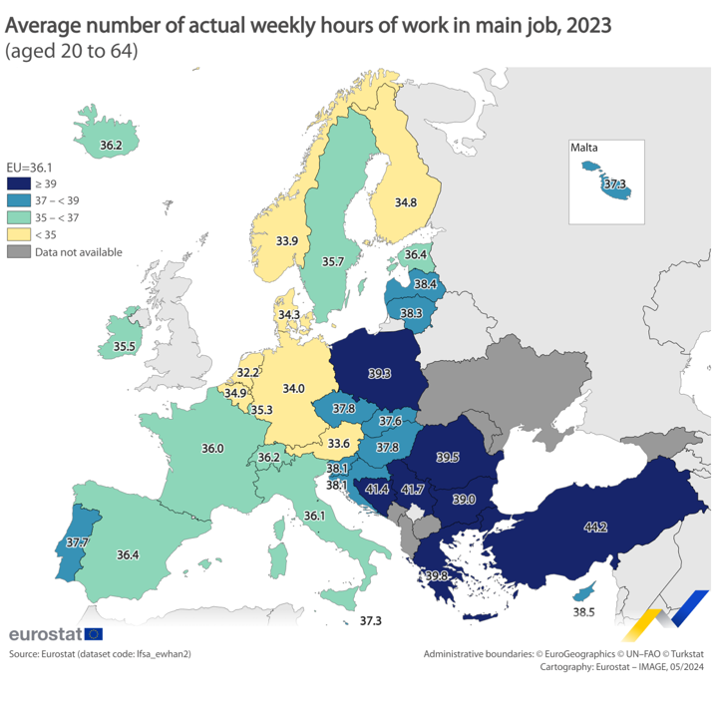
Quand Eurostat se penche sur les heures de taf des travailleurs européens, elle n’oublie pas de jeter un œil du côté des indépendants freelances. Un des segments de l’étude se pose la question suivante : Quelles sont les différences entre la durée moyenne habituelle de travail des employés et celle des travailleurs indépendants ?


Heures de travail/semaine :

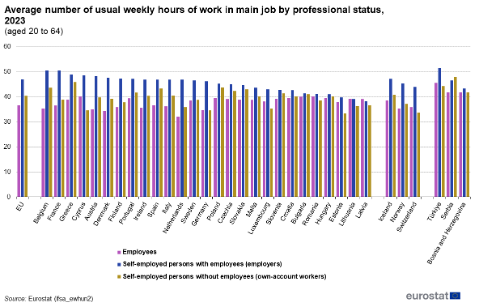
  • Dirigeants d’entreprise (avec employés) 47,0 h
  • Travailleurs indépendants et freelances : 40,4 h
  • Employés : 36,6 h

Au niveau de l’UE, en 2023, les dirigeants d’entreprise (avec employés) avaient le plus grand nombre d’heures de travail hebdomadaires : 47,0 heures. Suivis des travailleurs indépendants et freelances (sans employés donc) avec 40,4 heures. Du côté des employés, cela donne 36,6 heures par semaine.

Les indépendants belges travaillent le plus (mais ça, on le savait)

Les pays ayant la semaine de travail moyenne la plus longue pour les employeurs étaient la Belgique et la France (50,6 heures habituelles de travail par semaine). De plus, la Belgique montre la plus grande différence dans le nombre d’heures habituelles de travail par semaine entre les employés (35,3) et les travailleurs indépendants (43,6).

Là où les employés travaillent plus…

Dans de nombreux pays de l’UE, les travailleurs indépendants travaillaient plus d’heures par semaine que les employés en 2023. Cependant, à Chypre, en Estonie, en Allemagne, en Lettonie, en Lituanie, au Luxembourg et en Roumanie, les employés travaillaient nettement plus que les travailleurs indépendants – la plus grande différence entre les deux statuts professionnels a été observée à Chypre et en Estonie (les employés travaillaient en moyenne 5,7 et 4,6 heures de plus que les travailleurs indépendants, respectivement, par semaine).

La semaine de travail la plus longue

Parmi tous les pays de l’UE, la semaine de travail la plus longue pour les travailleurs indépendants a été observée en Grèce (45,8 heures habituelles de travail par semaine), en Pologne (43,7), en Belgique (43,6), en Espagne (43,3) et en Slovaquie (43,0)

Les employés travaillaient en moyenne plus d’heures par semaine à Chypre et en Roumanie (40,3 chacun) et en Bulgarie (40,0). Dans tous les autres pays, la semaine de travail moyenne comptait moins de 40 heures de travail pour les employés en 2023.

Les Pays-Bas, le Danemark et l’Allemagne montrent la semaine de travail la plus courte pour les employés (32,1, 34,4 et 34,7 heures habituelles de travail par semaine, respectivement).

Continuez sur votre lancée :

Posted in Marché du travail & politique | Tags , , | Commentaires fermés sur Indépendants vs employés : qui travaille le plus ?